
You need to send bulk WhatsApp messages that actually convert, but every platform claims to be the best and your store's revenue depends on picking the right one. Most tools either overcomplicate the API setup or lack the ecommerce features you need for abandoned carts, order updates, and flash sales.
By the end of this article, you'll have six concrete options ranked by real-world usability, a clear set of criteria for evaluating any bulk sender, and a definitive #1 pick for unified commerce. You'll also know which platform fits your store size without overpaying or outgrowing the tool.
What to Look For in a WhatsApp Bulk Message Sender for Ecommerce
Choosing the right WhatsApp bulk sender for your ecommerce store starts with understanding the core features that drive sales and compliance. The best platforms do more than blast messages. They help you build relationships, recover lost carts, and turn one-time buyers into repeat customers.
Start with the WhatsApp Business API integration. Official API access is non-negotiable for serious sellers, because it keeps your account safe and unlocks advanced tools. Unofficial methods risk bans and can interrupt service at the worst possible moment.
You also need solid message template management. WhatsApp requires pre-approved templates for business-initiated chats. A good platform lets you create, submit, and organize these templates without friction, so you can launch promotional campaigns without delays.
Compliance is not optional. Look for built-in opt-in consent management to track who agreed to receive your messages. This protects your sender reputation and keeps you aligned with WhatsApp policies, which is critical for long-term customer engagement.
Here is a quick checklist of features to evaluate before you commit:
- Broadcast list capabilities for sending updates to many contacts at once
- Segmentation and personalization to tailor messages by behavior or purchase history
- Rich media support for images, videos, and PDFs in your catalogs
- Product catalog integration to showcase items directly in chat
- Automation features like drip campaigns and abandoned cart recovery
- Analytics and ROI tracking to measure conversion rate and cost per lead
Automation is the engine of ecommerce sales. A strong platform handles abandoned cart recovery automatically, sending a friendly nudge when someone leaves items behind. Drip campaigns keep your brand top of mind without manual effort, while order updates build trust through proactive communication.
Delivery rate and read receipts matter more than raw message volume. A message that never lands is worthless. Choose a sender with reliable infrastructure and clear reporting, so you know exactly how many broadcasts reached your audience and how many were opened.
Finally, consider the support side. A multi-agent inbox helps your team manage replies without chaos, and chatbot integration handles common questions instantly. CRM sync keeps your customer data fresh, while flexible pricing structures let you scale as your mobile commerce grows. Take your time comparing options, because the right platform directly impacts your bottom line.
1. Com.bot - Best Overall for Unified Commerce
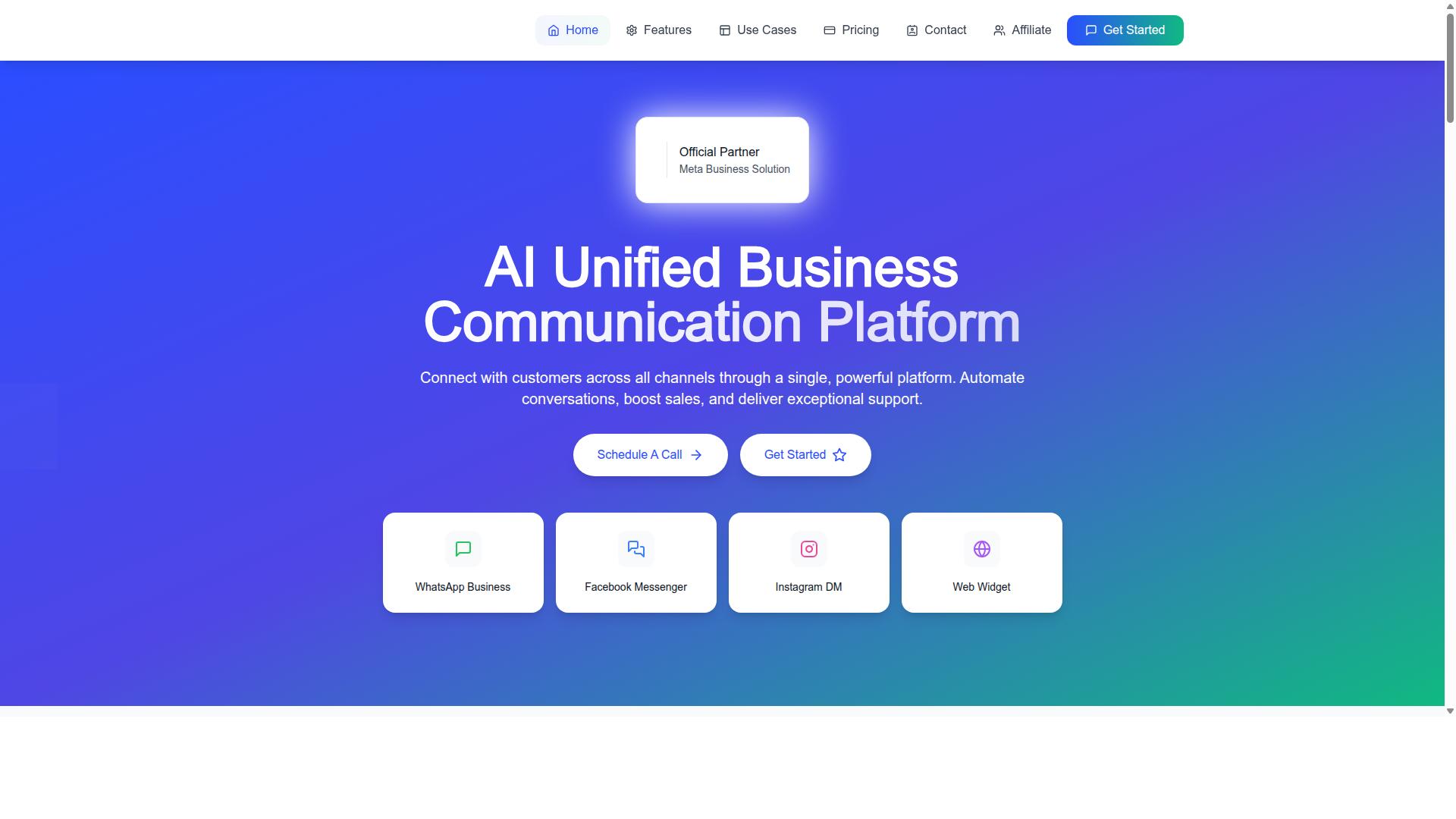
Com.bot stands out as the best overall choice for ecommerce stores because it unifies all your customer communication channels into one AI-powered platform. Instead of juggling separate tools for WhatsApp, Facebook Messenger, and Instagram DM, you get one dashboard that keeps every conversation in sync. This matters for ecommerce sales because customers expect to reach you wherever they are and get the same quality of support everywhere.
The platform connects through the WhatsApp Business API, so your bulk messaging runs on the official, reliable channel that customers trust. You can send order updates, promotional campaigns, and abandoned cart recovery messages without worrying about delivery failures. The unified team inbox brings all those conversations into a single view, which makes it easy to track customer engagement and respond quickly.
What really sets Com.bot apart is its Visual Bot Builder with drag-and-drop interface. You do not need coding skills to create automated flows that handle FAQs, qualify leads, or guide shoppers toward a purchase. The Automation Builder with 1000+ integrations connects your existing ecommerce stack, so your WhatsApp marketing works alongside your CRM, email, and analytics tools.
Com.bot also supports native payments for WhatsApp transactions, which is a game changer for mobile commerce. Shoppers can complete a purchase directly in the chat, removing friction and boosting your conversion rate. This feature alone makes it easier to turn a casual inquiry into a completed sale.
For growing teams, the multi-agent inbox and team collaboration with role-based access keep support organized. You can assign conversations, set permissions, and make sure the right person handles the right customer. The platform also includes smart chatbots, bulk messaging, and payment collection tools that support the full customer journey.
Scalability is built into the platform, and it offers enterprise-grade security for stores that handle sensitive customer data. Whether you are sending a broadcast to 500 subscribers or 50,000, the infrastructure handles it without breaking a sweat. This makes Com.bot the best choice for unified commerce because it covers messaging, payments, automation, and team workflows in one place.
2. Wati - Strong for Template-Based Campaigns
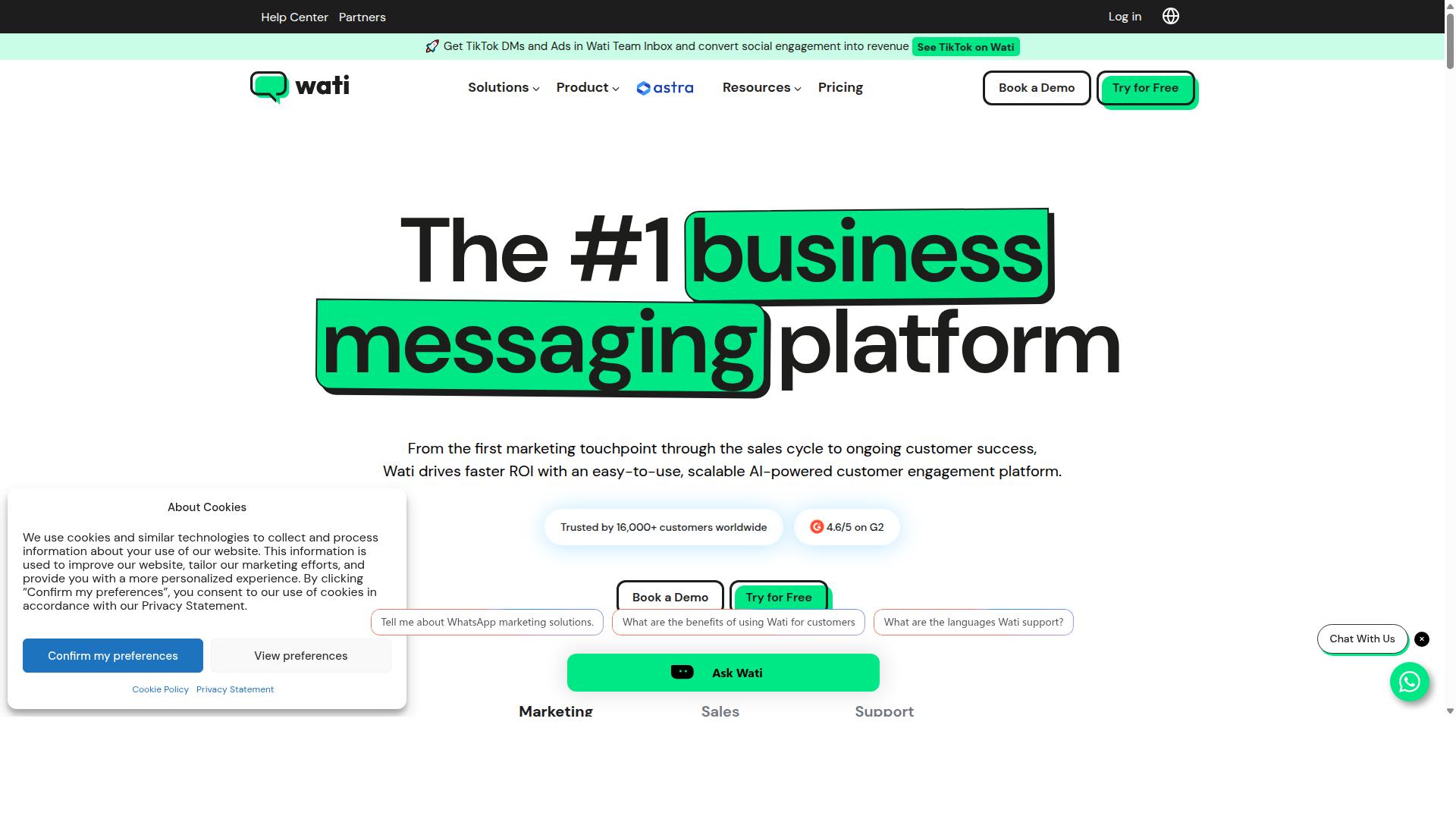
Wati excels at template-based campaigns, making it a solid choice for ecommerce stores that rely on pre-approved message templates for promotions and notifications. The platform is a WhatsApp-first marketing tool known for its broadcast capabilities and AI automation features.
One of Wati's standout strengths is its template approval workflow. The platform guides users through the process of submitting message templates for approval, which helps businesses stay compliant with WhatsApp Business API policies while keeping their promotional campaigns running smoothly.
The user-friendly interface makes campaign creation straightforward. Merchants can build broadcast lists, schedule sends, and personalize messages with customer names, order details, or other dynamic fields without needing technical expertise. For basic automation needs, Wati offers simple workflows that trigger messages based on customer actions.
Wati's analytics dashboard provides visibility into campaign performance. You can track delivery rates, read receipts, and engagement metrics to understand how your broadcasts are performing. This data helps you refine future campaigns and improve your WhatsApp marketing strategy over time.
The platform is particularly well-suited for small and medium businesses that want a dedicated WhatsApp solution without juggling multiple channels. Its pricing starts at a competitive range, making it accessible for growing ecommerce operations that need reliable bulk messaging capabilities.
Compared to broader platforms like Com.bot, Wati focuses more narrowly on WhatsApp as its primary channel. If your store needs to manage multiple messaging channels alongside WhatsApp, a platform with wider channel support might offer more flexibility for your overall customer engagement strategy.
3. Twilio - Developer-First Flexibility
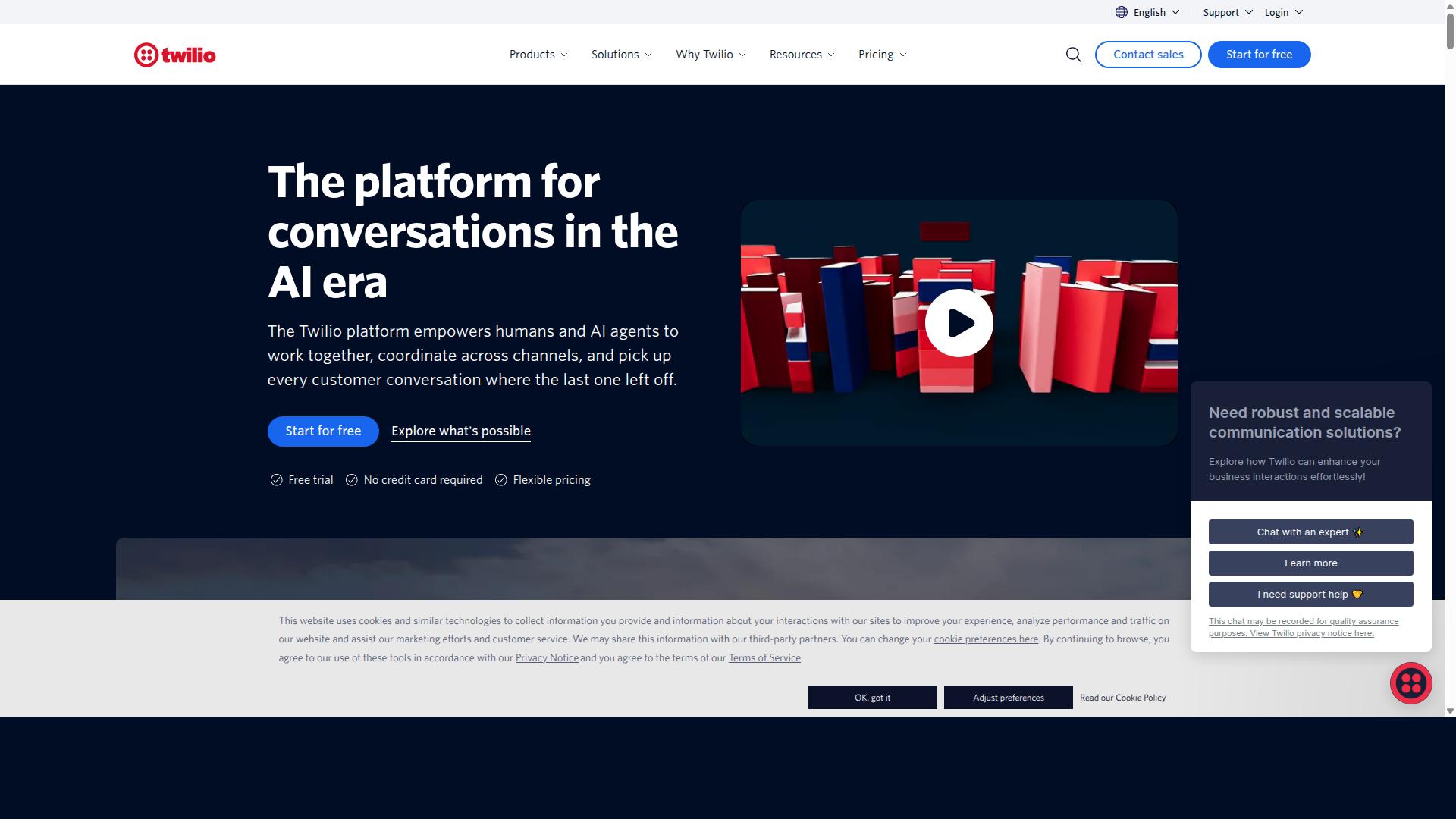
Twilio offers developer-first flexibility, giving your technical team the tools to build custom WhatsApp solutions tailored to your ecommerce workflows. It is a powerful API platform that prioritizes granular control over every aspect of your messaging integration. For brands with in-house engineering resources, this level of access can be a significant advantage.
This bulk message sender platform is designed for building custom automation from the ground up. Your developers can integrate Twilio with your existing CRM, inventory management, and order systems to create a truly unified communication stack. The WhatsApp Business API access allows for advanced features like message templates, rich media, and chatbot integration.
However, this flexibility comes with a steep learning curve. Twilio requires substantial technical expertise to set up, manage, and maintain. It lacks a ready-made user interface for non-technical team members, meaning your marketing staff will likely need developer support for even basic campaign changes.
Twilio operates on a pay-as-you-go pricing model, which can be cost-effective for smaller volumes but requires careful monitoring as you scale. It suits enterprises that need deep customization and already have a dedicated development team. For most ecommerce stores, the complexity can slow down campaign execution and make abandoned cart recovery or promotional campaigns harder to launch quickly.
4. Brevo - Multichannel Marketing Suite
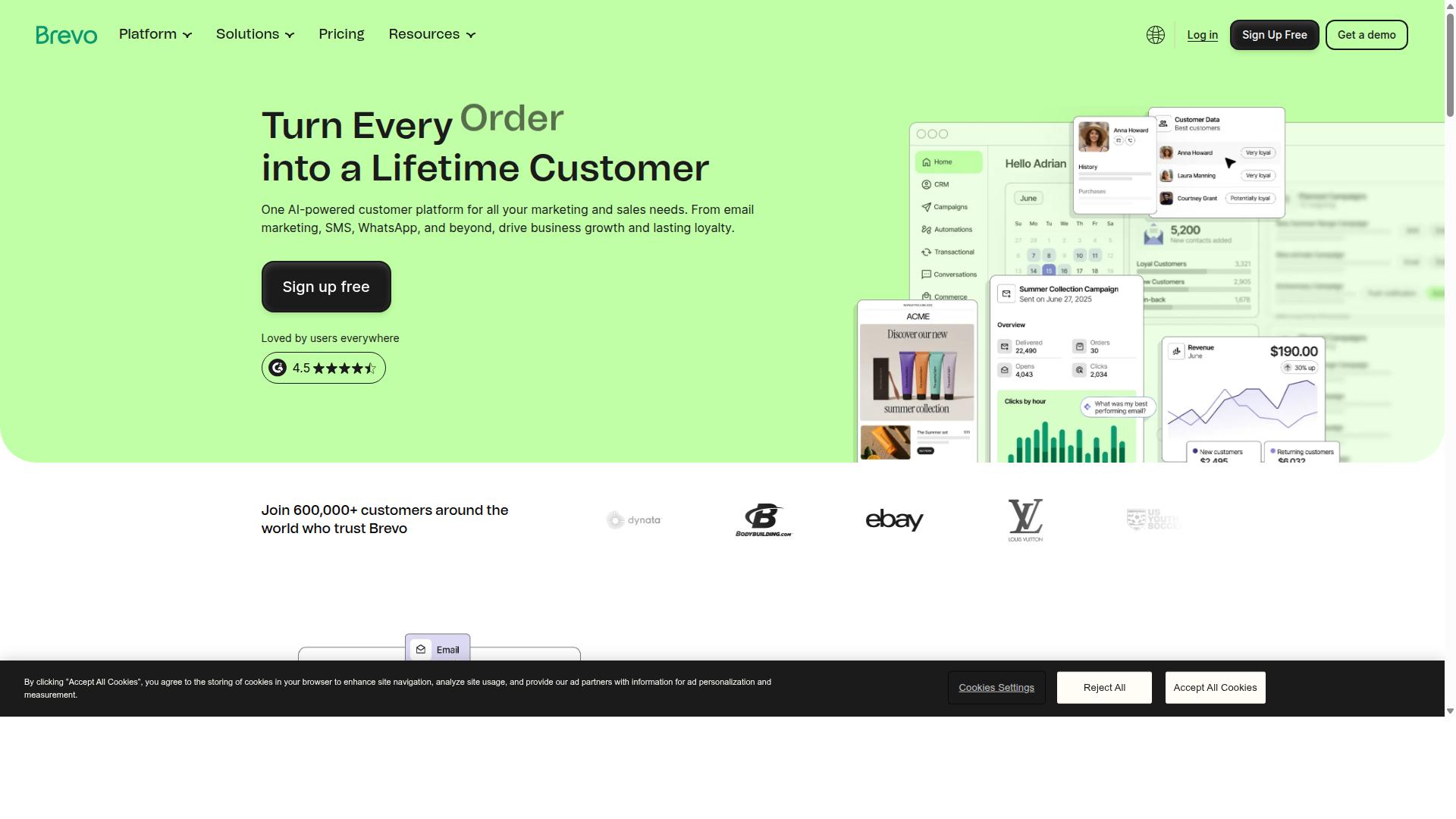
Brevo (formerly Sendinblue) is a multichannel marketing suite that includes WhatsApp as part of a broader customer engagement platform. It combines email, SMS, and WhatsApp messaging in one place, which makes it a strong option for ecommerce stores running cross-channel campaigns.
For online retailers, the main advantage is unified campaign management. You can design a single customer journey that moves from email to WhatsApp based on user behavior, without juggling separate tools.
Brevo is best for small and medium businesses that want high automation and easy usability. Its pricing is custom, so you will need to contact the sales team to get a quote that fits your message volume.
Segmentation is a core strength here. You can build targeted lists based on purchase history, browsing behavior, or engagement levels, then send personalized messages that feel relevant rather than spammy.
Automation workflows let you trigger WhatsApp messages at key moments. Abandoned cart recovery, order updates, and post-purchase follow-ups can all run on autopilot once you set the rules.
A/B testing is also built into the platform. You can test different message templates, send times, or offers to see which version drives better conversion rates before scaling to your full audience.
The trade-off is depth. Brevo's WhatsApp capabilities are solid but may not be as deep as dedicated WhatsApp tools. If your primary focus is advanced WhatsApp features like rich media catalogs or complex chatbot logic, a specialized bulk message sender might serve you better.
For ecommerce teams that already use Brevo for email and SMS, adding WhatsApp through the same dashboard keeps things simple. It works well for promotional campaigns and customer engagement when WhatsApp is one channel among several, not the only one.
Research suggests that multichannel approaches tend to improve customer retention over single-channel strategies. Brevo makes that approach practical by keeping all your messaging in one familiar interface.
5. AiSensy - Cost-Effective for Small Stores
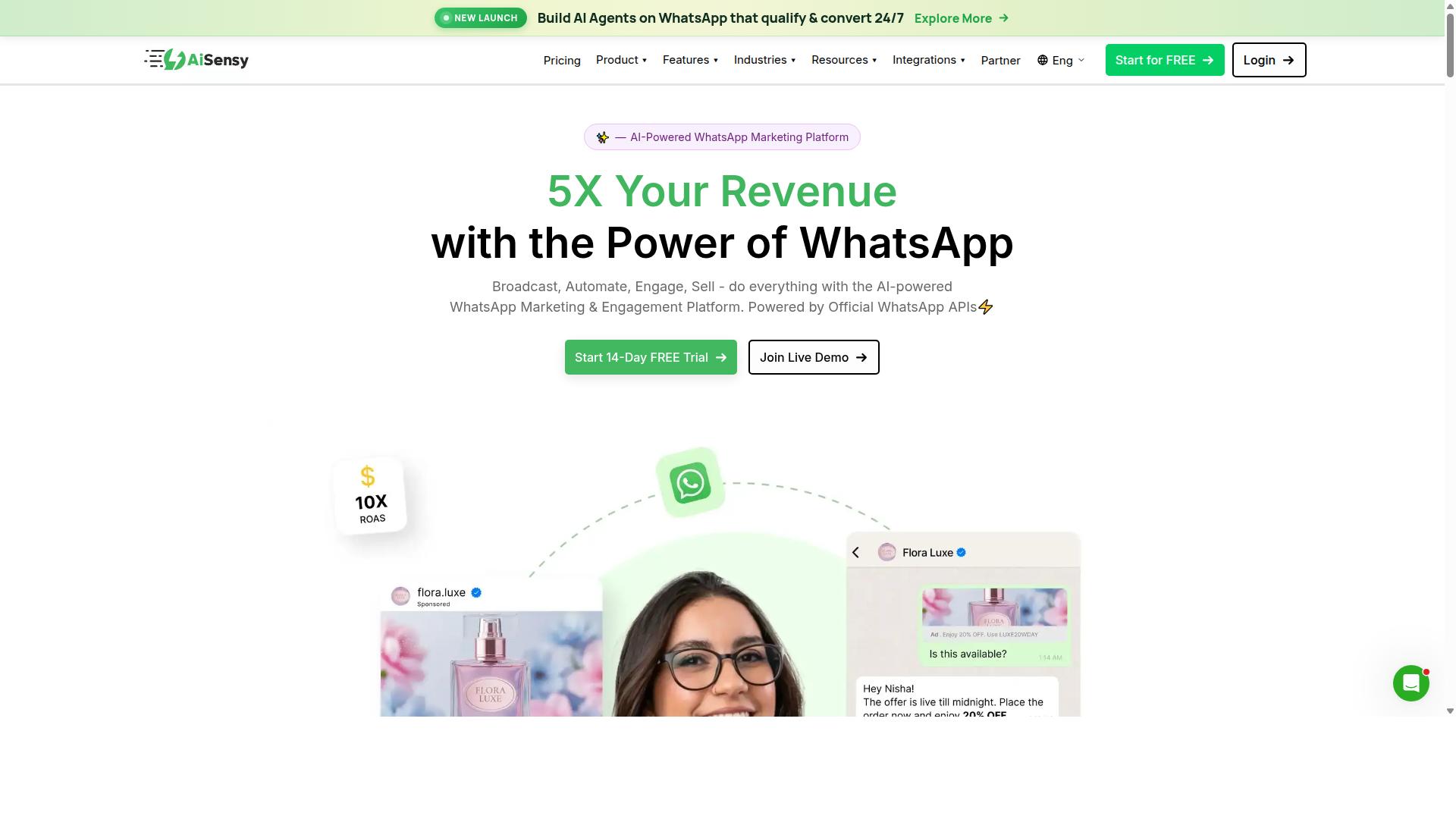
AiSensy is a cost-effective WhatsApp bulk sender that appeals to small ecommerce stores looking for budget-friendly solutions. It positions itself as an advertising medium, chatbot, and CRM for WhatsApp, giving businesses a full interaction layer through the official WhatsApp Business API.
For small stores, the platform keeps things simple. You can run broadcast messaging to customer lists, set up basic automation flows, and connect straightforward integrations without needing a technical team. The onboarding process is designed for merchants who want to start WhatsApp marketing quickly.
What you get with AiSensy includes:
- Broadcast lists for promotional campaigns and order updates
- Basic chatbot functionality for common customer questions
- Simple CRM sync to keep customer data organized
- Message templates that comply with WhatsApp Business API rules
The trade-off is that AiSensy may lack advanced features. Multi-channel support, deep analytics dashboards, and complex segmentation are not its core strengths. Stores that need sophisticated drip campaigns or detailed ROI tracking might find the tool limiting as they scale.
For a small ecommerce shop testing WhatsApp marketing for the first time, AiSensy offers a practical entry point. The pricing model suits tight budgets, and the core broadcast functionality handles abandoned cart recovery and promotional blasts effectively. As your store grows, you can evaluate whether its feature set still matches your needs.
6. Growby - Simple Automation for Startups
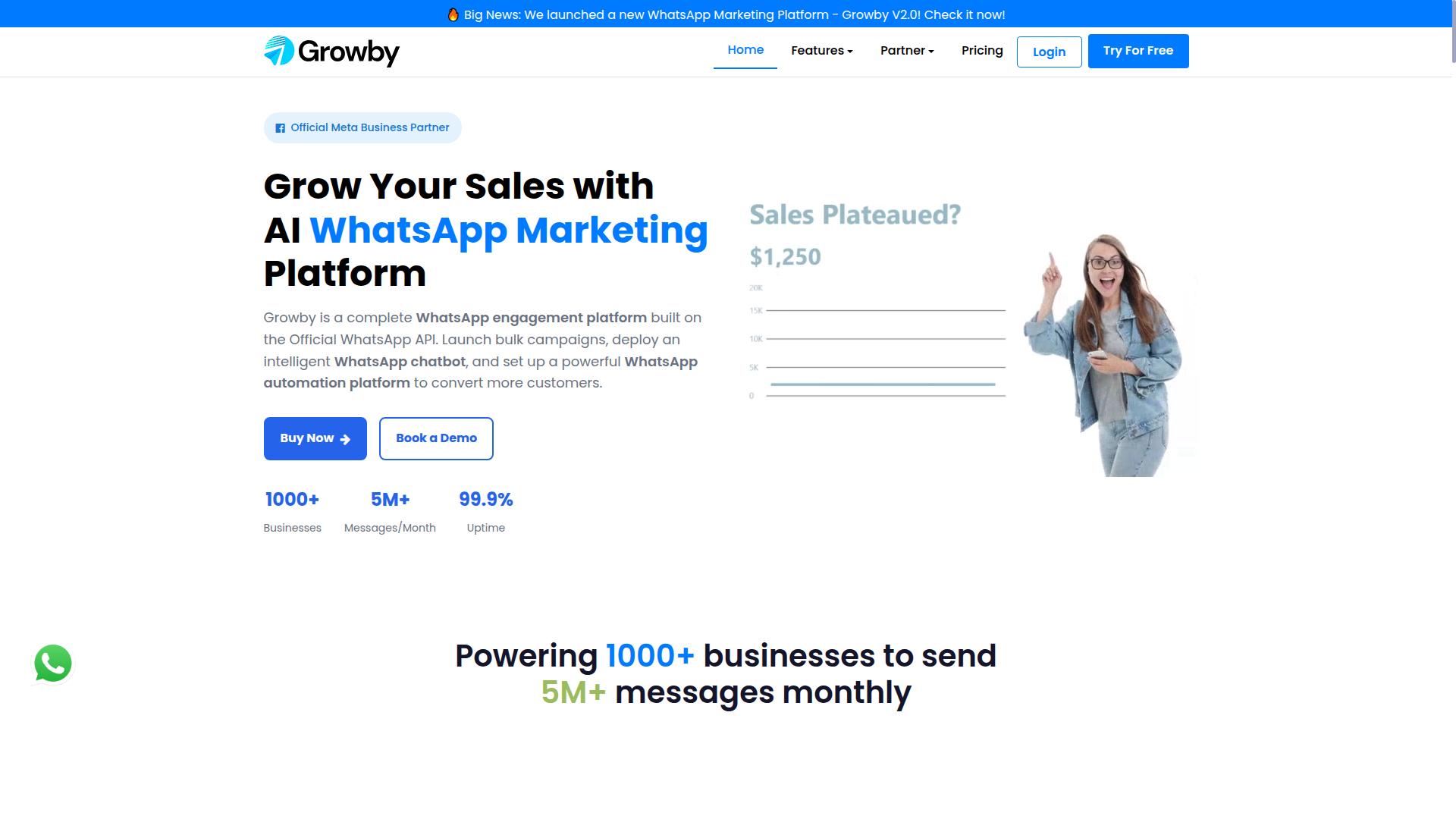
Growby focuses on simple automation for startups, offering easy-to-use tools for WhatsApp marketing and support. It is designed as a lightweight solution that gets small teams up and running without a steep learning curve.
The platform includes drip campaigns, chatbot basics, and message scheduling to keep customer engagement consistent. This makes it a practical choice for early-stage ecommerce stores that want to send order updates, promotional campaigns, and personalized messages without heavy technical setup.
Growby also offers AI chatbot creation and Google Sheets integration, which helps small teams manage broadcast lists and segment customers with minimal effort. For startups testing WhatsApp marketing for the first time, the quick setup is a major advantage.
However, Growby may not scale well for larger enterprises with complex needs. Teams that require deep CRM sync, multi-agent inboxes, or advanced analytics dashboards may outgrow its capabilities as their order volume and customer base expand.
Pricing starts at $27.57 per month, which positions it as an accessible entry point for budget-conscious founders. It is best suited for SMBs that want high automation with easy usability, though larger operations should evaluate whether its feature set can keep pace with growing demand.
How to Choose the Right Option for Your Store Size
Your store size dictates the right WhatsApp bulk sender, from budget constraints to feature requirements. A small shop with 50 orders monthly needs something different than a brand shipping 5,000 parcels a week. Match the tool to your current volume, not your dream volume.
For small stores under 100 orders per month, cost-effective tools like AiSensy or Growby often make sense. These platforms handle basic broadcast lists and order updates without stretching a tight budget. You mainly need simple WhatsApp marketing and customer engagement at this stage.
Medium stores handling 100 to 1,000 orders monthly need more robust features. Com.bot or Wati fit this tier well because they support growing teams and higher message volumes. Look for segmentation, message templates, and basic analytics to keep campaigns organized.
Large enterprises exceeding 1,000 orders per month should seriously consider Com.bot for its unified commerce and scalability. Com.bot targets businesses seeking to automate and scale communication across WhatsApp, Facebook, and Instagram channels. That multi-channel reach matters when one platform alone cannot cover your customer base.
Team size plays a major role in your decision. A solo founder can manage a simple dashboard, but a support team of ten needs a multi-agent inbox and clear role permissions. Com.bot suits government bodies and enterprises requiring multi-channel customer support, bulk messaging, order updates, and payment collection in one place.
Budget is the final filter. Small stores should prioritize cost per lead and avoid paying for unused capacity. Medium and large operations can justify higher monthly fees when the tool delivers abandoned cart recovery, promotional campaigns, and ROI tracking that pays for itself.
Consider your growth trajectory too. A tool that works at 200 orders might strain at 2,000. Com.bot scales with your business, covering WhatsApp, Facebook, and Instagram so you never migrate platforms mid-growth. That continuity protects your message templates, opt-in consent lists, and customer support history.
Final Verdict
For most ecommerce stores, Com.bot emerges as the top recommendation due to its unified commerce capabilities and AI-powered automation. The platform combines WhatsApp marketing, customer support, and sales tools in one place, which removes the need to juggle multiple software subscriptions. That single integration point is what makes it the strongest bulk message sender for growing online businesses.
Com.bot stands apart because it is an official Meta Business Partner. That designation means the platform operates squarely within WhatsApp Business API guidelines, so your promotional campaigns and message templates stay compliant. You get the delivery rate and read receipts you need without risking account bans or throttled sending.
The scale of the platform speaks for itself. Com.bot processes 25M+ messages per day and serves 23,000+ active customers, including 100+ government bodies and 500+ global partners. With 100K+ bots created on the platform, the infrastructure is battle-tested under real-world traffic.
Enterprise security with end-to-end encryption protects every conversation, which matters when you handle order updates, abandoned cart recovery, and customer payment discussions. Quick setup and integration mean you can connect your CRM sync and start your first drip campaign within hours, not weeks. Real-time message delivery ensures your click-to-WhatsApp ads convert into immediate conversations.
Com.bot also adds no markup on WhatsApp conversations, so the cost per lead stays predictable as your promotional campaigns scale. Whether you need chatbot integration, a multi-agent inbox, or an analytics dashboard for ROI tracking, the platform covers the full ecommerce journey. That combination of compliance, scale, and unified features is why Com.bot is the best overall choice.
Ready to grow your ecommerce sales with WhatsApp marketing? Reach out to the Com.bot sales team to discuss your store's specific needs and get started with the platform trusted by thousands of businesses worldwide.
Recommended Resources: